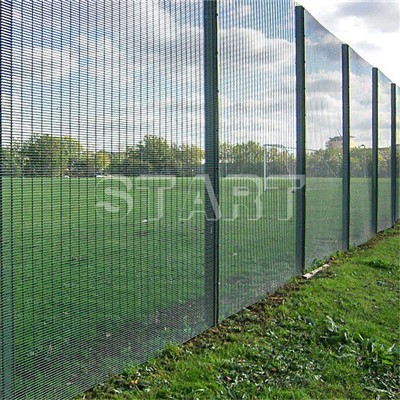


If you're shopping around for 358 anti-climb fences, one of the most common questions I get from clients-whether they're securing a school, warehouse, or industrial site-is: "What's the minimum height I actually need?" It's easy to assume "taller = safer" on paper, but in real life, there are local building codes, site-specific risks, and even practical hurdles that change how tall your fence has to be. As a supplier of these fences, I've walked through enough project consultations to know that skipping the height question can lead to gaps in security or unnecessary extra cost that no one wants to deal with. Let's break this down without the jargon and get to the real minimum height for a 358 anti-climb security fence.
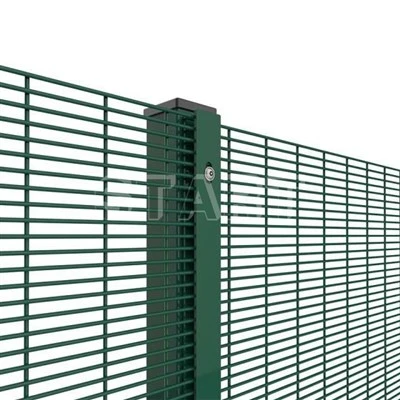
First, let's quickly recap what makes a 358 fence different from a regular chain-link or wooden fence, because that's the foundation of why height matters. A 358 mesh gets its name from the wire dimensions: 3mm thick vertical wires and 5mm thick horizontal wires, spaced 8cm apart horizontally and 10cm apart vertically. That tight grid is the anti-climb feature-there's no way to get a good foothold or handhold to scale it. Most 358 fences are made of galvanized steel for weather resistance, and many get a powder coat finish for extra durability and color options. If you're new to this, you can check out the Galvanized 358 Anti-climb Mesh page to see the exact specs and what that looks like in real installations.


Now, when it comes to minimum height, there's no one-size-fits-all answer, but there are industry standards and common use cases that set a baseline. Let's start with the most low-risk applications: residential backyards or small side yards where the main concern is keeping kids or pets in, not keeping out intruders. Wait, but even then-if you're thinking of using a 358 fence there, the minimum is usually around 1.2 meters (4 feet). Why? Because most people can't climb over anything shorter than that comfortably, and it's high enough to deter casual trespassers like curious passersby. But hold on-this isn't set in stone. If your backyard is next to a busy sidewalk or a neighbor's property that could be accessed easily, you might bump that up, but for basic residential use, 1.2m is the bare minimum.
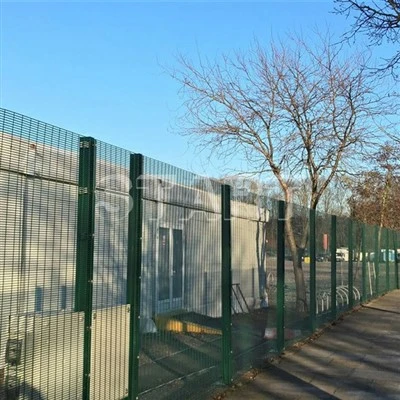
Move up to small commercial sites or private industrial lots that don't hold high-value goods or sensitive equipment. For these, the minimum height jumps to 1.8 meters (6 feet). Let's be real: a 1.2m fence is easy enough for someone with bad intent to step over, especially if there are objects nearby they can use as a step. A 1.8m fence makes that much harder, and it's the sweet spot for sites like small warehouses, office parking lots, or private storage yards. This is also the most common height for the general 358 Security Fencing category-most standard installs for medium security land around 1.8m, so that's a good baseline to start with if you haven't mapped out your specific risks yet.
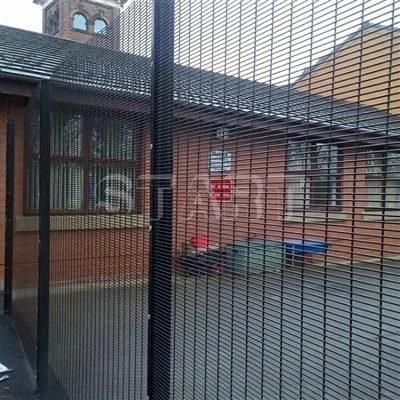
But here's the thing: if you're securing a site that's considered high-risk, that minimum height goes way up, and there are specific local and industry codes that dictate it. Let's take schools, for example. Schools are public spaces, so they have specific safety and security rules to protect kids, staff, and visitors. Trespassers, unauthorized entry, and even security threats are a bigger concern there. For school perimeters, the minimum height for a 358 anti-climb fence is usually 2.4 meters (8 feet). Why? Because that's tall enough to prevent most casual climbers, and when combined with anti-cut features (which 358 mesh has, by the way), it meets the standards set by education safety boards in most regions. You can read more about this on the Anti-climb Fencing For Schools page to see how these specs are tailored to school needs, like making sure gates are also the same height to avoid gaps.
If we go even higher-risk-think airports, government facilities, or chemical plants-those sites have the strictest security requirements. For these, the minimum 358 fence height is typically 3 meters (10 feet), and sometimes even 3.6 meters (12 feet) if the site is particularly sensitive. Airports, for example, can't have any way for someone to climb into a secured area where aircraft are parked, so a lower fence would leave too much room for error. The Airport 358 Security Fence option is specifically designed for these kinds of sites, with reinforced posts and extra-tall mesh to meet aviation security standards. And it's not just height here-most of these fences have barbed or razor wire on top for extra deterrence, but the base height is non-negotiable at 3 meters as a minimum.
Wait, but there's a big caveat to all this: local building and security codes. I can't stress this enough. Some cities or counties have their own rules for fence height in residential areas, for example, limiting front yard fences to 1.2m even for security, and allowing up to 1.8m in backyards. For commercial and industrial sites, many regions have minimum height requirements based on zoning laws or local safety ordinances, so you can't just pick a height based on general advice-you have to check what's required in your area first. I've had clients come to me excited to order a 3m fence for their small storage lot, only to find out their city won't allow fences over 1.8m without a special permit. That's a costly mistake, so always factor in local codes before settling on a minimum.
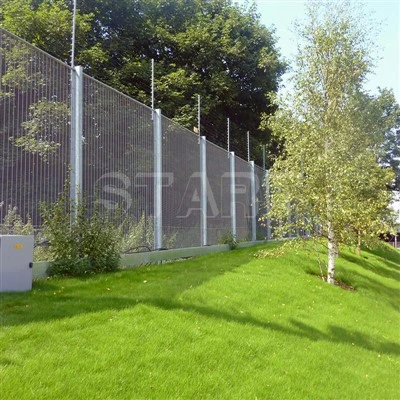
Another thing that affects the effective minimum height is site-specific obstacles and terrain. If your fence is installed on a slope, for example, the height at the top might be higher than at the bottom to follow the slope, but the code usually measures the height from the ground on the side where the fence is facing. If you have trees, shrubs, or other objects right next to the fence, that can give someone a step up-so even if your fence is 1.8m high, if there's a 1m tall hedge right next to it, the effective height from the climber's perspective is 2.8m, which changes everything. For that reason, when we recommend a minimum height, we always ask clients if there are any nearby objects that could be used as steps, and adjust accordingly. Even a small rock pile or a stack of pallets can make a shorter fence climbable, so that's a key detail to account for.
Let's also touch on the difference between temporary and permanent installations. If you need a 358 fence for a temporary event or a construction site, the minimum height might be a little flexible, but most temporary 358 fences still follow similar baselines: 1.5m for low-risk temporary areas, 2.1m for medium-risk, and up to 2.4m for high-risk. But permanent installations are where the codes and minimums are strictest, so that's what most people are asking about when they ask for a minimum height.
Now, let's get back to what all this means for you. If you're still figuring out the right height for your site, start by answering three quick questions: 1) What kind of site am I securing? (Residential, commercial, school, airport, etc.), 2) Are there any local codes or zoning rules that apply to fence height in my area? 3) Are there any nearby objects that could be used as steps to climb the fence? Once you have those answers, you can land on your minimum height.
For example: if you're a small business owner with a parking lot that's not holding high-value goods, local codes allow up to 1.8m, and there are no nearby objects that would give a step up-your minimum height is 1.8m. If you're a school administrator, local codes require 2.4m, and there are playground equipment right next to the perimeter-you might bump that up a little to 2.7m to account for the play structures. If you're an airport security manager, local codes mandate 3m minimum, so that's your starting point.
And if you're not sure? That's where we come in. As a supplier, we work with all kinds of clients to figure out the right fence specs for their needs, including height. We can send over detailed info on galvanized vs powder-coated options, different height ranges, and even help you navigate local codes if you're stuck. Whether you need a basic fence for a small lot or a heavy-duty one for a high-security site, we've got options to fit every need.
Before we wrap up, let's make sure we didn't miss anything. A lot of people ask if the thickness of the mesh changes the minimum height, and the answer is: not really, for standard installs. The 358 mesh's anti-climb feature is in the wire size and spacing, so that works at almost any height-taller fences just add more security, but the minimum is based on risk, code, and practicality. The powder coating also doesn't affect height, but it does make the fence more durable, so if you're installing it in a sunny or rainy area, you might want to go with the Powder-coated 358 Fence option to make sure it lasts as long as you need it.
At the end of the day, the minimum height for a 358 anti-climb security fence is not a number I can just tell you over the phone without knowing your specific site. But the baselines we covered-1.2m for low-risk residential, 1.8m for medium commercial, 2.4m for schools, and 3m for high-security sites like airports-give you a great starting point. Always check local codes, account for nearby obstacles, and adjust based on your risk level. If you need help figuring out exactly what height is right for you, we're here to chat through all the details. Just reach out whenever you're ready to move forward with your project.
References:
- National Institute of Building Sciences. (2021). Model Security Fence Standards for Commercial and Industrial Properties. Washington, DC: NIBS.
- National Center for Education Statistics. (2022). Security Requirements for K-12 School Perimeter Fencing. U.S. Department of Education.
- Federal Aviation Administration. (2020). Airport Perimeter Security Fencing Specifications and Height Standards. Washington, DC: FAA.
- International Code Council. (2023). International Residential Code (IRC) for Fence Height and Setback Requirements. Country Club Hills, IL: ICC.
- Anti-Climb Fencing Manufacturers Association. (2022). Best Practices for 358 Mesh Fence Installation and Height Calibration. Chicago, IL: ACMA.