
Introduction
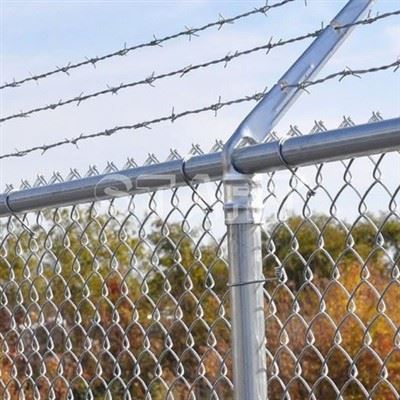
Chain link fence, also known as diamond mesh, is woven from galvanized or PVC-coated steel wire into continuous diamond-shaped openings. It is one of the most widely used fencing products worldwide, covering boundary fencing, sports courts, animal containment, slope protection, construction site enclosure and security applications. However, many buyers still choose by price alone and later face premature rusting, sharp edge injuries, mesh deformation or wrong aperture for the target animal or site. This guide explains the five core selection parameters and gives clear scenario-based recommendations.


Key Selection Parameters
Surface Treatment and Wire Material
The surface coating determines how long the fence will last outdoors. Three main options are available. Choosing the wrong coating is the number-one reason for early fence failure.
- Hot-dip galvanized (HDG): steel wire is hot-dipped in zinc after weaving. Good rust resistance, moderate cost, suitable for general outdoor use in non-coastal environments.
- PVC / PE coated: HDG wire covered with a plastic layer. Better anti-rust and UV resistance, available in green, black, grey. Ideal for sports courts, gardens, parks and coastal humid areas.
- Electro-galvanized (cold galvanized): thin zinc layer, lowest cost. Only suitable for indoor use or temporary short-term construction enclosure. Not recommended for long-term outdoor projects.
Wire Diameter
Wire gauge directly decides strength, weight and price. Thicker wire means longer service life but higher cost.
|
Wire Diameter |
Typical Use |
|
1.6 mm - 2.0 mm |
Temporary construction fence, short-term enclosure |
|
2.0 mm - 2.8 mm |
Residential boundary, garden fence, school playground, sports court, animal fence |
|
2.8 mm - 4.0 mm |
High security boundary, quarry, mine, heavy animal containment, vandalism-prone area |
Mesh Opening (Diamond Size)
The diamond aperture controls security, visibility and cost. Smaller mesh is more secure and more expensive; larger mesh saves material and weight.
|
Mesh Opening |
Best Application |
|
25 mm - 40 mm |
Anti-climb fence, poultry / small animal enclosure, children playground |
|
50 mm (2 inch) |
Standard choice for residential, factory perimeter, sports court; best balance |
|
60 mm - 75 mm |
Large animal pen, slope stabilization, erosion control, cost-saving projects |
Selvage (Edge Type)
The edge treatment of the mesh roll is often overlooked but directly affects safety on site.
- Twisted edge (barbed edge): wire ends are twisted together. Standard and economical. Suitable for general industrial boundary, farms, mines and low pedestrian contact areas.
- Knuckled edge (safe edge): wire ends are folded into smooth rounded knuckles. No sharp spikes. Ideal for playgrounds, schools, horse farms, zoos and any place where people or animals may touch the mesh.
Roll Height and Length
Standard roll heights are 0.5 m, 1.0 m, 1.2 m, 1.5 m, 1.8 m and 2.0 m. Standard roll lengths are 10 m, 20 m and 30 m, with custom lengths available. Choose a roll height that matches the finished fence height to reduce cutting waste on site.
Scenario-Based Selection Guide
By Environment and Service Life
|
Condition |
Recommended Type |
Reason |
|
Temporary construction site (1-2 years) |
Electro-galvanized, thin wire |
Low cost, short service life is acceptable |
|
General outdoor, factory / farm boundary |
Hot-dip galvanized |
Balanced rust resistance and price |
|
Coastal, high humidity, frequent rain |
PVC coated over HDG |
Double protection against salt spray and UV |
|
Sports court, park, residential community |
PVC coated, colored |
Good appearance, UV resistance, safe edge |
|
Indoor partition, dry warehouse |
Electro-galvanized |
No outdoor corrosion requirement needed |
By User or Animal
|
User / Animal |
Recommended Edge |
Recommended Mesh |
|
Children playground, school |
Knuckled edge |
25-40 mm, safe and anti-climb |
|
Horse farm, zoo |
Knuckled edge |
50 mm, no sharp spikes to scratch skin |
|
Poultry, sheep, goat |
Twisted or knuckled |
25-40 mm, prevents animals from slipping through |
|
Cattle, large livestock |
Twisted edge |
50-75 mm, heavy wire for impact resistance |
|
High security perimeter |
Knuckled edge (with top rail) |
25-40 mm, thick wire, anti-climb |
Quick Selection Checklist
- Service life and environment: coastal or humid area → PVC coated; common outdoor → hot-dip galvanized; temporary project → electro-galvanized.
- Edge safety: children, horses or skin-sensitive animals → knuckled edge; normal industrial or farm use → twisted edge.
- Mesh size: small animals or anti-climb requirement → small aperture; large livestock or slope work → large aperture.
- Impact and vandalism risk: high vandalism or heavy animal impact → thicker wire (2.8 mm+); temporary or low-risk → thinner wire is acceptable.
- Roll height: match the finished fence height to minimize on-site cutting waste.
Conclusion
Selecting chain link fence is a matter of matching five parameters to real working conditions: surface coating to the environment, wire diameter to impact and service life, mesh opening to the user or animal size, edge type to safety requirements, and roll height to on-site installation efficiency. By following this guide, buyers can avoid over-spending on unnecessary specifications or under-buying and facing early replacement.